The problem
Moisture is one of the most critical variables in cashew processing. It directly affects how cleanly the shell cuts, how much usable kernel you get from a batch, how well it roasts, and how long it lasts in storage. When the moisture is off, you get poor cuts, lower yield, uneven roasting, and in the worst case, mould that ruins entire batches. For an industry that operates on thin margins, these aren't small problems. They're the difference between a profitable season and a bad one.
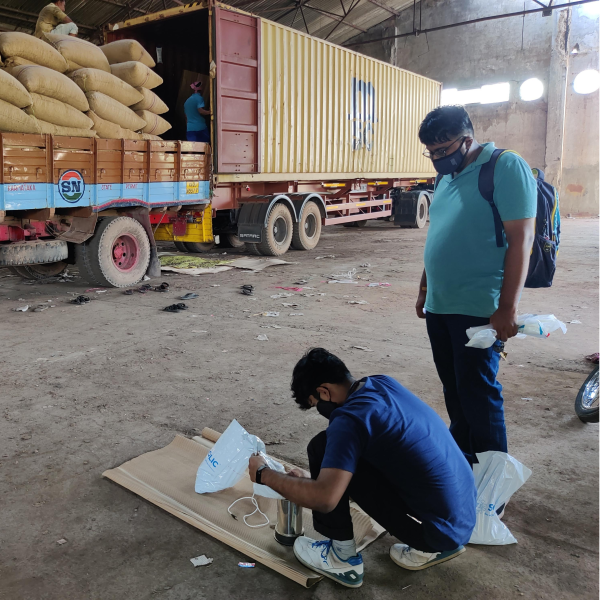
And yet, for the longest time, there was no reliable way to measure it on the factory floor. The standard method in most processing units was simple: grab a handful of raw cashew nuts, toss them, and listen to the sound they make. Experienced processors could tell from the sound whether the moisture was in the right range. It sounds crude, but people with decades of practice were genuinely good at it.
The problem is that this skill takes years to develop. A new worker can't learn it in a week. On a bad day, or with an unfamiliar batch from a different origin, even the most experienced person can get it wrong. And when someone with thirty years of experience retires, that knowledge disappears with them. There was nothing to fall back on.
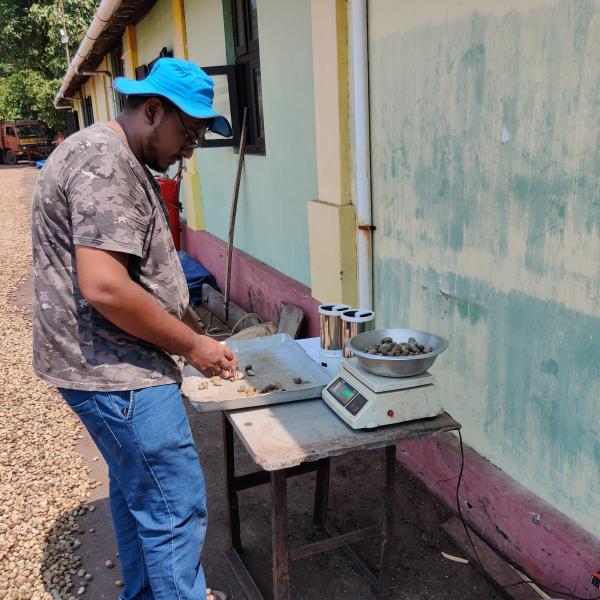
Some factories had tried using grain moisture meters, but those were built for rice and wheat, not cashews. The readings were wildly inconsistent and most processors eventually gave up on them. Lab testing (oven drying method) was accurate but took hours, which made it useless for the kind of real-time decisions that happen on the factory floor every few minutes.
How we got into this
I was attending a talk where industry leaders were speaking to small startups, sharing real problems and hoping someone in the room would take them seriously. During one of those sessions, someone from the cashew industry asked a straightforward question: can anyone build a reliable moisture meter for cashews?
They explained that nothing purpose-built existed. That they'd been asking for years. That the available tools weren't designed for their needs and didn't give trustworthy results. I didn't fully grasp the scale of the problem at that point. I didn't understand how deeply moisture affects every stage of processing. That understanding came later, gradually, from spending time on factory floors and seeing firsthand what goes wrong when moisture decisions are off.
But the question stuck with me. I started visiting factories, talking to people, watching how they worked. And the more I learned, the more obvious it became that this was a real problem that nobody had solved properly.
What we built
We built a moisture meter from scratch, specifically for Raw Cashew Nuts (RCN) and Natural Whole kernels (NW). Not a modified grain meter. Not a lab instrument. A portable, field-ready device designed to give stable, repeatable moisture readings under the conditions that actually exist in a cashew processing factory: dust, heat, rough handling, unstable power, and operators who don't have time to read a manual.
What the device gets right:
- Consistent, repeatable readings across different batches and origins
- Simple enough that anyone can use it without training
- Built to survive the reality of a factory floor
- Handles dust, drops, and voltage that fluctuates throughout the day
- Designed to be opened and repaired, not thrown away when something breaks
- Priced for small and mid-sized processing units, not just large factories
Using it takes three steps:
Sample
Place a fixed quantity of RCN or NW into the chamber. No preparation needed.
Measure
The device reads the electrical response, which correlates with moisture content.
Decide
Compare readings across trays and batches. Know when to dry more, cut, or store.
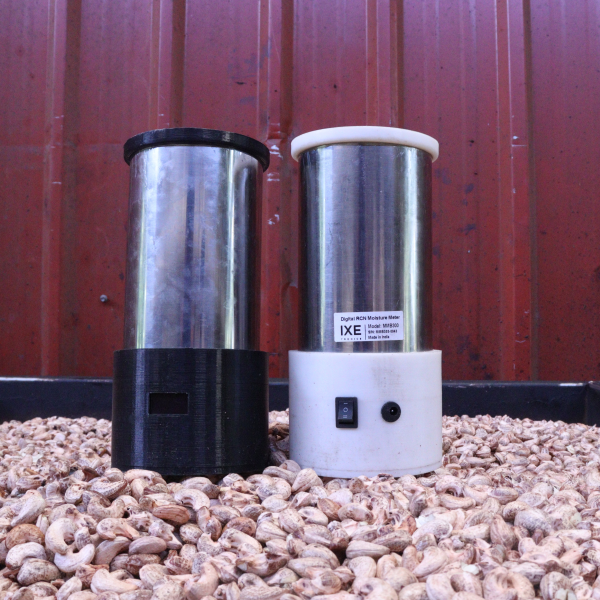
The calibration alone took over a year. You can't calibrate a device like this in a lab because cashews vary by origin, season, storage conditions, and processing method. We had to collect data from real factories, godowns, and dockyards under every condition we could find. We went through many prototypes, some of which failed in ways we didn't catch until they were already in someone's hands. Each failure taught us something that made the next version better.
The impact
Every unit out there got there because someone used the device, trusted the readings, and recommended it to someone else. That's it. No marketing budget, no distributor network, no sales pitch. Just one processor telling another that this thing actually works.
What changed on the ground is simple but significant. Processors who used to argue about moisture on the factory floor now check the reading and move on. Purchasing decisions on raw material that used to depend entirely on one experienced person's judgement can now be verified by anyone. Small and mid-sized factories that couldn't afford lab testing finally have a way to check moisture before it becomes an expensive problem.
The disagreements got fewer. The drying decisions got better. The cutting results got more consistent. Storage losses went down because people could verify readiness instead of guessing. None of this is flashy. But for the people who work in this industry every day, it's the kind of change that actually matters.
See it in action
A closer look at the device and how it fits into daily processing work.
The people behind this
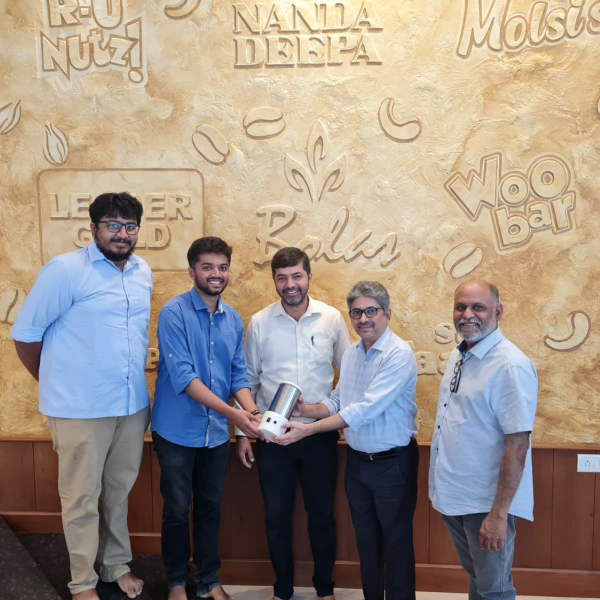
Pramod Sir (Mr. Pramod Kamath) is the person who made this product possible. When I started, I was an engineer with no understanding of the cashew industry. I could build circuits but I didn't know the first thing about what happens on a processing floor or what the people running these operations actually need. Pramod Sir filled every one of those gaps. He didn't advise from a distance. He ran experiments with us, spent time in the field collecting data, helped us understand why our readings didn't make sense, connected us with factory owners willing to test rough prototypes, and told us clearly when our work wasn't good enough. A lot of the early trust we earned came from his reputation, not ours. And this isn't past tense. He's still involved, still helping, still pushing us to make the device better.
Beyond Pramod Sir, a lot of other people showed up at different stages and helped in ways that mattered. This wasn't built by one person having a clever idea. It was built by a network of people being generous with their time and knowledge.
Ran experiments with us, taught us the industry, connected us to our first users, and continues to help improve the device today. This product carries his fingerprints as much as anyone's.
Long drives to factory floors, recalibrating under the afternoon sun, scratching our heads over readings that made no sense, and doing it all again the next day. More people showed up for this than I can list here, and I owe each of them.
Let us test rough prototypes on live production lines and gave us feedback we didn't always want to hear but always needed.
Manufacturing, field support, and everything that keeps the device running in the hands of the people who use it.
Want the full specs?
This page is the story. The product page has specifications, and everything formal.
Or reach out directly at adithya@ixetronics.com